
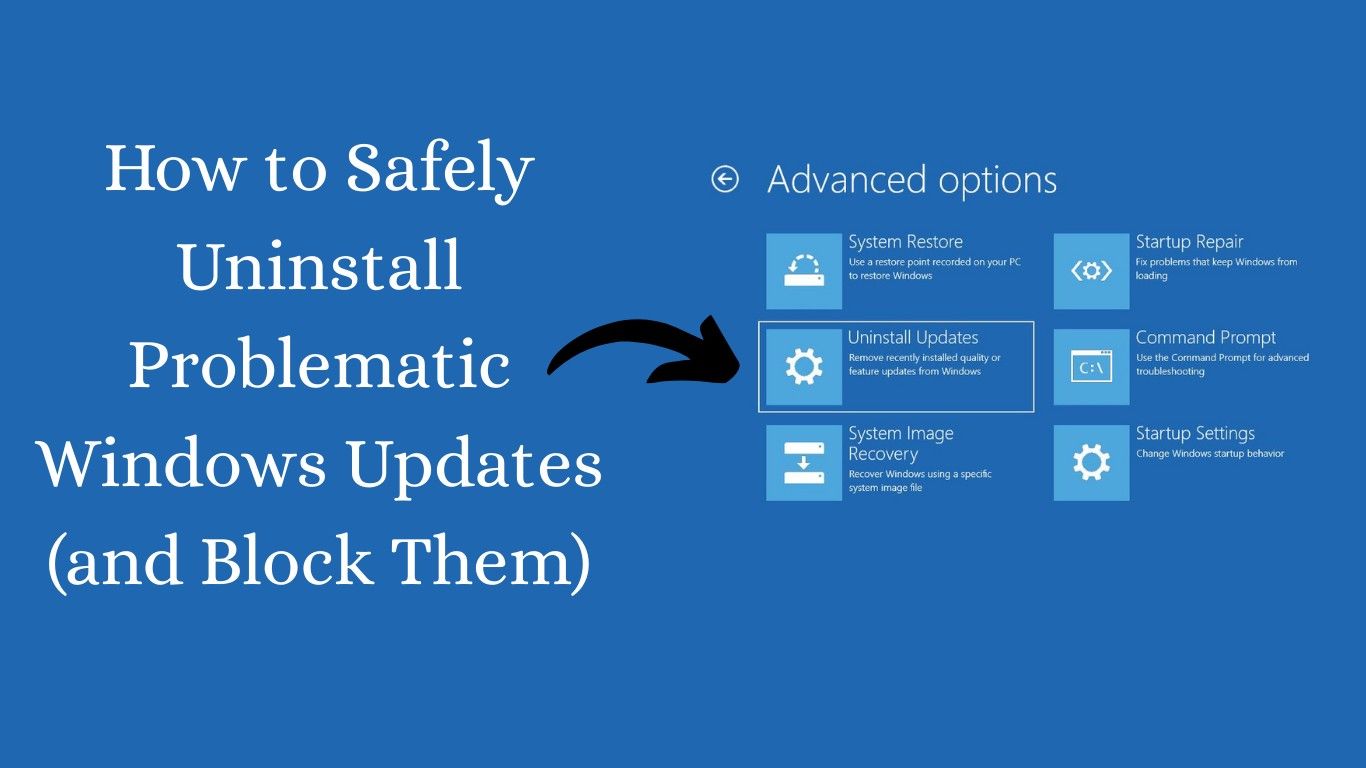
How to safely uninstall problematic Windows updates is a question many Windows users ask when their PC starts acting weird after a recent update. Let’s be honest—updates are supposed to fix bugs, improve security, and give you new features. But sometimes, they end up breaking your system instead of fixing it.
If your computer has started freezing, crashing, or running slower right after a Windows update, don’t panic. I’ve been there too, and I’ll walk you through exactly how to uninstall problematic Windows updates safely and make sure they don’t come back to bother you again.
By the end of this guide, you’ll feel confident handling updates like a pro.
Why Windows Updates Can Cause Problems
Before we jump into uninstalling, let’s understand why Windows updates cause issues in the first place:
- Driver conflicts – A new update might not play well with your graphics or Wi-Fi drivers.
- Incomplete installs – Sometimes, an update doesn’t install properly, leaving your system unstable.
- Compatibility issues – Certain apps or older hardware may not work correctly with the latest patch.
- Buggy patches – Microsoft isn’t perfect. Occasionally, updates are released with known bugs.
Knowing this helps you decide whether you really need to uninstall or just troubleshoot.
ALSO READ: 7 Ways to Speed Up Windows 11 Startup Time
Step 1: Identify the Problematic Windows Update
The first step in how to safely uninstall problematic Windows updates is to figure out which update is causing the trouble.
Here’s how you can check:
- Press Windows + I to open Settings.
- Go to Windows Update > Update history.
- Look at the list of recently installed updates.
- If you notice issues started after a certain update, that’s your suspect.
Tip: Write down the KB number (e.g., KB5034441). You’ll need it later.
Step 2: How to Safely Uninstall Problematic Windows Updates
Now let’s remove that troublemaker.
Method 1: Uninstall via Settings
- Open Settings with Windows + I.
- Navigate to Windows Update > Update history.
- Scroll down and click Uninstall updates.
- Select the update you want to remove.
- Click Uninstall and follow the prompts.
Method 2: Use Control Panel (for Windows 10/11)
- Press Windows + R, type
appwiz.cpl, and hit Enter. - On the left side, click View installed updates.
- Right-click the problematic update.
- Choose Uninstall.
Method 3: Uninstall Updates via Command Prompt
If Settings doesn’t work, you can use Command Prompt:
- Search for Command Prompt and run it as Administrator.
- Type:
wusa /uninstall /kb:1234567(replace1234567with your update’s KB number). - Press Enter and restart your PC when prompted.
Step 3: How to Block Problematic Windows Updates from Reinstalling
Uninstalling an update is one thing, but stopping it from coming back is another. Windows loves to reinstall updates automatically.
Here’s how you can block problematic Windows updates:
Option 1: Use Microsoft’s Troubleshooter Tool
- Download the “Show or Hide Updates” Troubleshooter from Microsoft’s official website.
- Run the tool and select the update you want to block.
- Windows will no longer try to install it.
Option 2: Pause Updates Temporarily
- Go to Settings > Windows Update.
- Select Pause updates for 7 days (or more).
- This is useful if you just need a short break while waiting for Microsoft to release a fixed update.
Option 3: Use Group Policy Editor (Pro Editions Only)
- Press Windows + R, type
gpedit.msc, and hit Enter. - Navigate to Computer Configuration > Administrative Templates > Windows Components > Windows Update.
- Change the setting to stop automatic update installs.
Step 4: Restart and Test Your PC
Once you safely uninstall problematic Windows updates, restart your computer. Use it normally and check if the issues are gone.
- If your PC runs smoothly again, congrats—you fixed it!
- If the problem persists, you may need to roll back a driver, run system restore, or wait for a stable patch.
Extra Tips for Staying Safe with Updates
- Backup before updates – Always keep a backup of important files.
- Delay updates – Wait a week before installing new updates to see if others report issues.
- Update drivers separately – Outdated drivers can clash with updates.
- Follow trusted guides – Like this one on SolvingDad.com (bookmark us for future fixes).
FAQs on How to Safely Uninstall Problematic Windows Updates
Q1: Is it safe to uninstall Windows updates?
Yes, as long as you only uninstall the update causing issues. Security updates are important, so don’t remove those unless absolutely necessary.
Q2: Will uninstalling an update delete my files?
No. Uninstalling updates doesn’t affect your personal files. It only rolls back system changes.
Q3: Can I reinstall an update later?
Yes, you can. Go to Windows Update > Check for updates and install it again when you’re ready.
Q4: What if I can’t boot into Windows after an update?
Boot into Safe Mode and uninstall the update from there. You can also use System Restore if available.
Q5: Should I disable Windows Update completely?
Not recommended. Updates are critical for security. Instead, block only the problematic update.
Final Thoughts
Now you know exactly how to safely uninstall problematic Windows updates and block them from coming back. The process is simple once you identify the culprit, uninstall it, and use Microsoft’s tools to stop it from reinstalling.
Next time an update crashes your system, you’ll know what to do—no panic, just step-by-step action. And hey, if you want more Windows 10 and Windows 11 fixes, stick around here at SolvingDad.com. I’ll keep sharing solutions that make your PC life easier.
ALSO READ: